

Support Coordination/
Psychosocial Recovery Coaching
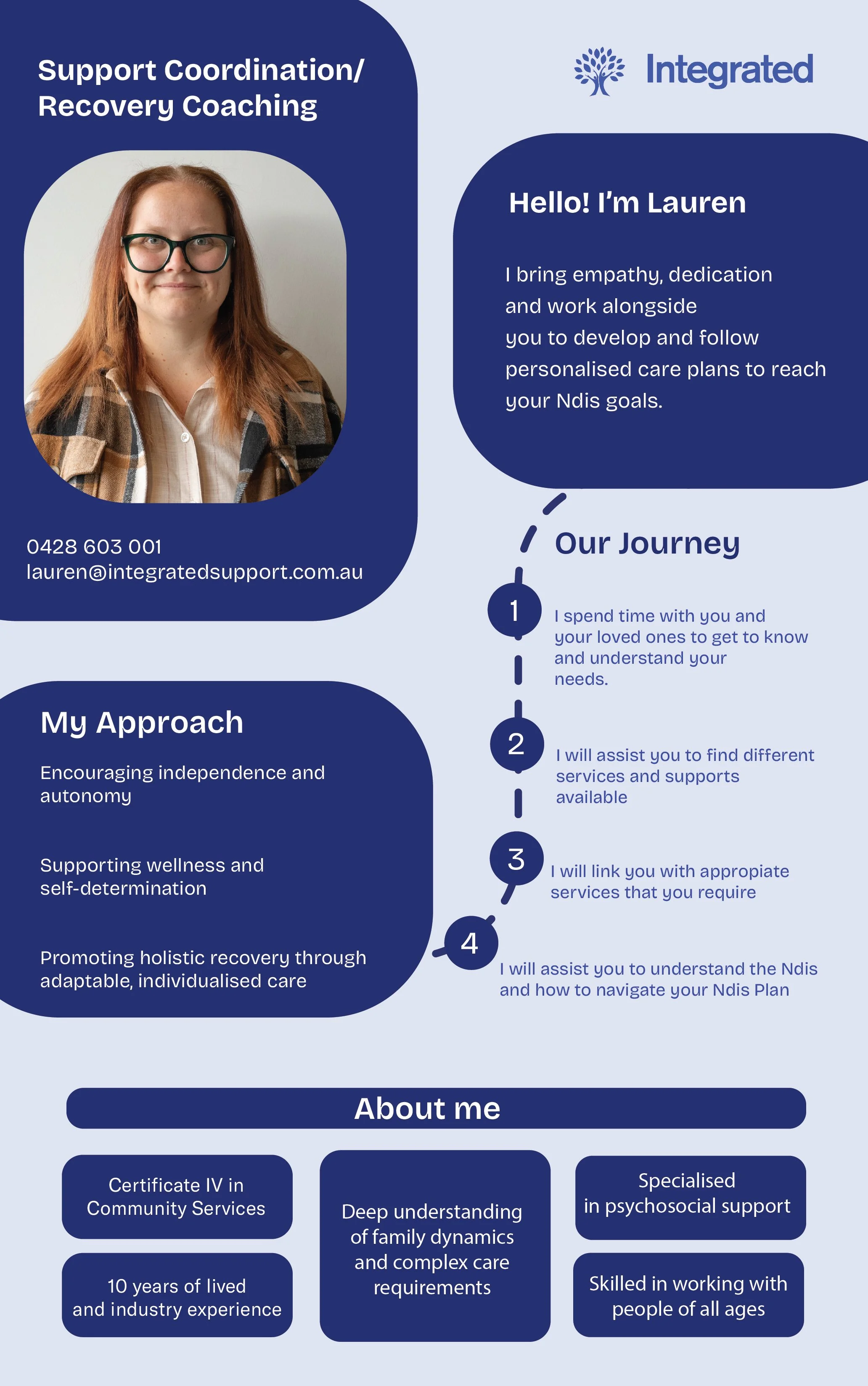
Meet Lauren:
Our Amazing
Support Coordinator/
Psychosocial Recovery Coach
What’s the difference between Support Coordination and Psychosocial Recovery Coaching?
While Support Coordination and Psychosocial Recovery Coaching both support people to navigate the NDIS, they have different focuses and purposes. Understanding the difference helps participants choose the right support for their needs.

Support Coordination (NDIS)
Support Coordination helps NDIS participants understand, implement, and manage their NDIS plan so they can access the right supports and services with confidence.
NDIS Support Coordinators assist participants to:
Understand their NDIS plan, funding, and supports
Connect with suitable NDIS service providers
Coordinate multiple supports and services effectively
Build capacity to manage supports independently
Identify and resolve barriers, issues, or gaps in services
Navigate complex service systems with confidence and choice
Support Coordination is a practical, plan-driven, and systems-focused support, empowering participants to make informed decisions and maximise the benefits of their NDIS plan.
Psychosocial Recovery Coaching (NDIS)
Psychosocial Recovery Coaching supports people living with psychosocial disability to strengthen wellbeing, recovery, and meaningful participation in everyday life.
NDIS Psychosocial Recovery Coaches support participants to:
Build hope, confidence, and emotional resilience
Strengthen social connections and community participation
Develop routines that support mental health and wellbeing
Work towards personal recovery and life goals
Navigate challenges related to mental health
Build skills for independence, self-advocacy, and empowerment
Psychosocial Recovery Coaching is person-centred, strengths-based, and recovery-focused, walking alongside participants as they build capacity, connection, and a meaningful life.
Get in Touch
We welcome you, your family member or a trusted person to contact us over the phone or email for any questions, enquiries or further information.